Your Rights as a Participant
& Informed Consent
Your safety, well-being, and privacy are the highest priorities in clinical research. As a study participant, you have the right to:
Receive clear information about the study before joining
Ask questions at any time
Decide freely whether or not to participate
Leave the study at any time without affecting your regular medical care
Have your personal and medical information kept confidential
Before joining a study, you will review and sign an Informed Consent Form, which explains the study procedures, potential risks, and benefits.
Questions to Ask Before Joining a Study
If you are considering participation, it can be helpful to ask:
What is the purpose of the study?
How long will the study last?
What procedures or tests will be required?
Are there potential risks or side effects?
Will I receive compensation or reimbursement?
Who will oversee my care during the study?
The research team should always take the time to answer your questions.
Additional Resources
You can learn more about clinical research and find ongoing studies through trusted organizations:
National and international clinical trial registries
Patient advocacy organizations
Hospitals and academic research centers
Government health agencies
These resources provide reliable information about current research opportunities and patient rights.
What is Informed Consent?
Before you join a clinical trial, one of the most important steps is reviewing and signing an Informed Consent Form.
Informed consent is more than just a signature on a piece of paper. It is a process designed to make sure you:
Understand the study you are considering
Know the potential risks and benefits
Are aware of your rights as a participant
Have the opportunity to ask questions before deciding
It is your way of saying, “I understand what this study involves, and I agree to participate.”
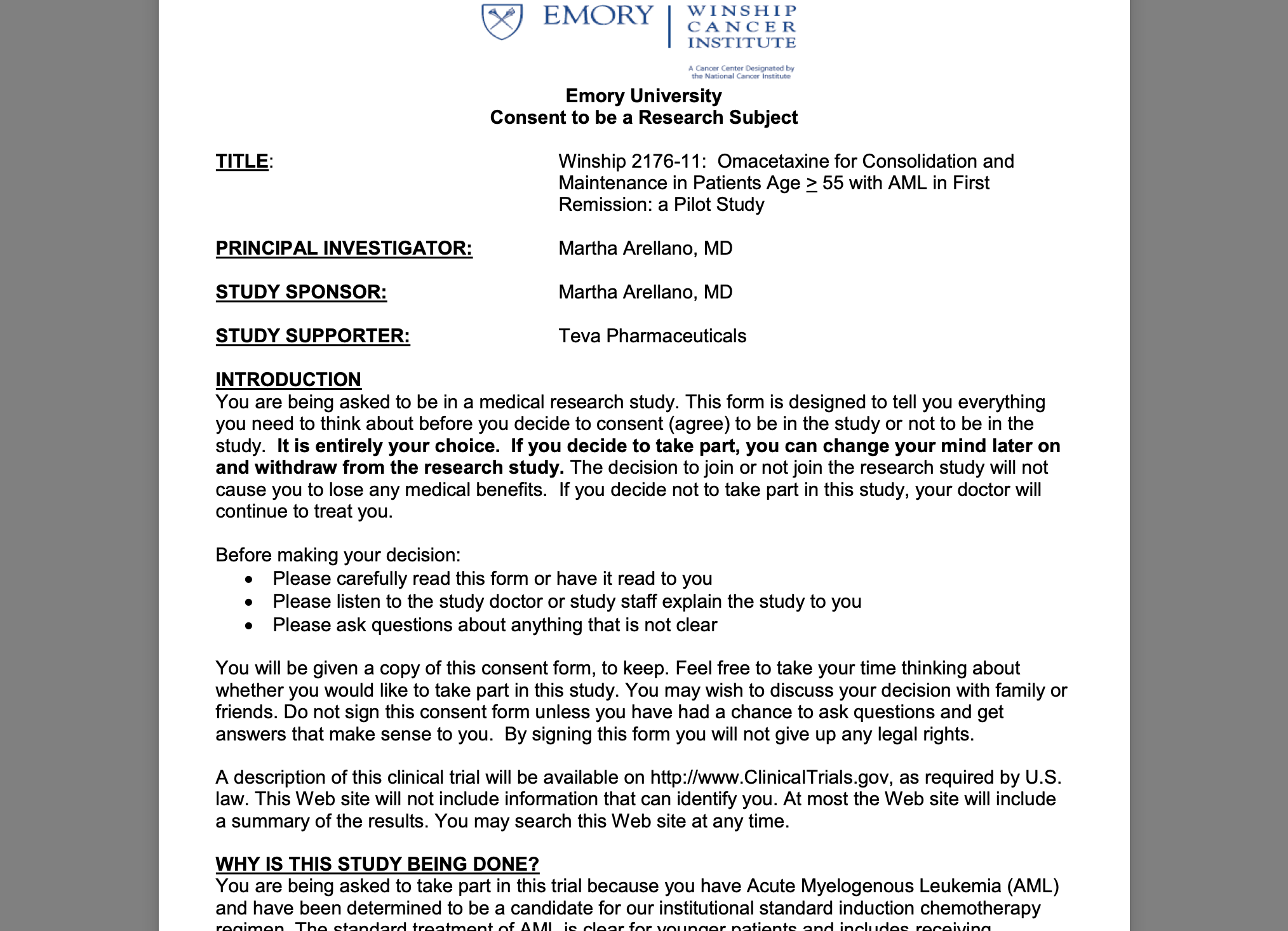
Here you can see a sample how the Informed Consent looks like:
You can download a sample of this document from many resources.
I used US government website ClinicalTrails.gov Link : https://cdn.clinicaltrials.gov/large-docs/95/NCT01873495/ICF_001.pdf
Why It Matters
Clinical trials involve medical procedures, new treatments, or interventions that may carry risks. Informed consent ensures that:
You are fully aware of what will happen during the trial
You understand any potential side effects or risks
You know who to contact if you have questions or concerns
Your decision to participate is completely voluntary
It’s about protecting you and empowering you to make the best choice for your health.
What an Informed Consent Form Should Include
A good Informed Consent Form is written in plain language and clearly explains:
Purpose of the study – why the research is being done
Procedures involved – what tests, visits, or treatments are required
Potential risks and benefits – what may happen to you
Alternatives – other treatment options outside the study
Rights of participants – including the right to withdraw at any time
Confidentiality – how your information will be kept private
Contact information – who to reach if you have questions or need help
Tips for Reviewing the Form
Take your time: Don’t feel rushed. Read everything carefully.
Ask questions: No question is too small—clarity is essential.
Bring someone you trust: A friend or family member can help you review and understand the information.
Look for key points: Make sure risks, benefits, and rights are clearly stated.
Keep a copy: You should always have a copy of the signed form for your records.
Your Rights During the Study
Signing the informed consent form does not mean you give up your rights. You always have the right to:
Ask questions at any point
Withdraw from the study at any time, for any reason
Receive medical care and support regardless of participation
Have your information kept private and secure